For Patients
Earlier answers. Less harm. More transparency.
If you've felt dismissed or misunderstood, you're not alone. Many chronic pain patients find themselves lost in a maze of referrals and treatments that don't lead to clear answers. PainMAP helps your clinician understand what may be driving your pain — so care can finally follow a treatment plan matched to your needs. You will spend less time trying treatments that don't meet your goals.
Learn MoreWhy getting better feels impossible.
Long waitlist for secondary referrals
Many tests but no clear answers
Feels like trial-and-error care
Side effects from medications that don't deliver sustained results
Loss of trust in the system
Feeling punished for not improving

What keeps your pain chronic?
Pain can persist not because of ongoing injury, but because of how your body and nervous system are processing signals. PainMAP identifies the specific drivers so your care can target what actually matters.
Threat processing
Your brain interprets signals as more dangerous than they are
Nervous system sensitization
Your nervous system amplifies pain signals
Behavioral reinforcement
Activity avoidance and stress patterns keep the cycle going
PainMAP identifies which of these drivers are active in your case, so treatment can target the right ones.
A different path forward.
Usual
PainMAP
Clear explanation of why your pain persists
Care plan tailored to your specific pain drivers
Know which treatments are likely to help
Know which tests and referrals to avoid
Fewer unnecessary scans and appointments
Your clinician has more time to talk with you
Pre-authorization completed before you leave
Track your progress and analysis over time.
See how targeted interventions affect your outcomes week by week. Evidence of improvement builds trust and motivation.
 PainMAP
Pain Mechanism Profile
What keeps your pain chronic
Targeted Care Pathways
What PainMAP means for patients.
- Earlier answers
- Clear explanations
- Less unnecessary testing
- Less medication stacking
- Safer care
- More consistent pathways
- A plan that makes sense
How PainMAP works for you.
Three steps — from your first visit to a clear plan.
01
Intake
Form completed or uploaded before your visit.
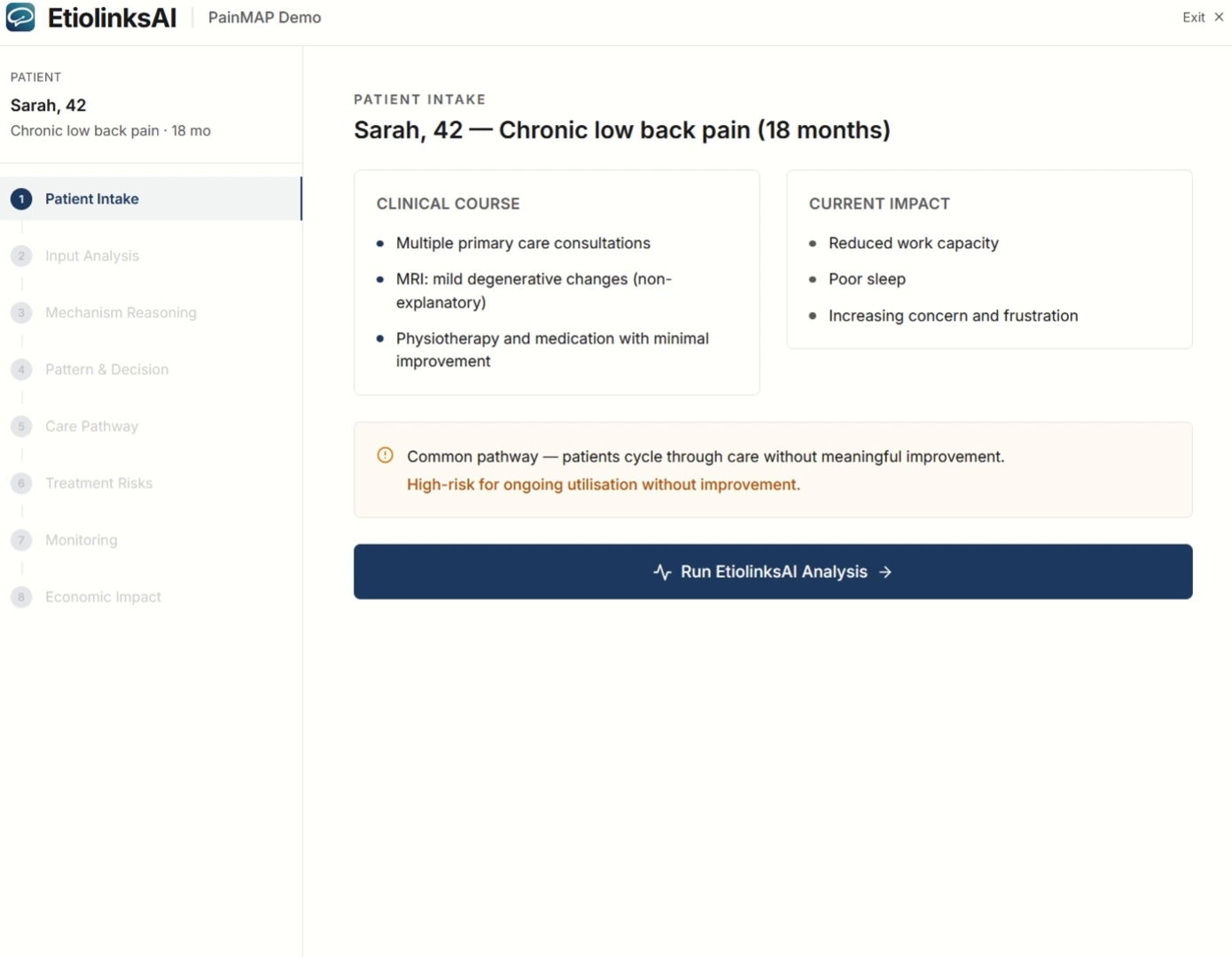
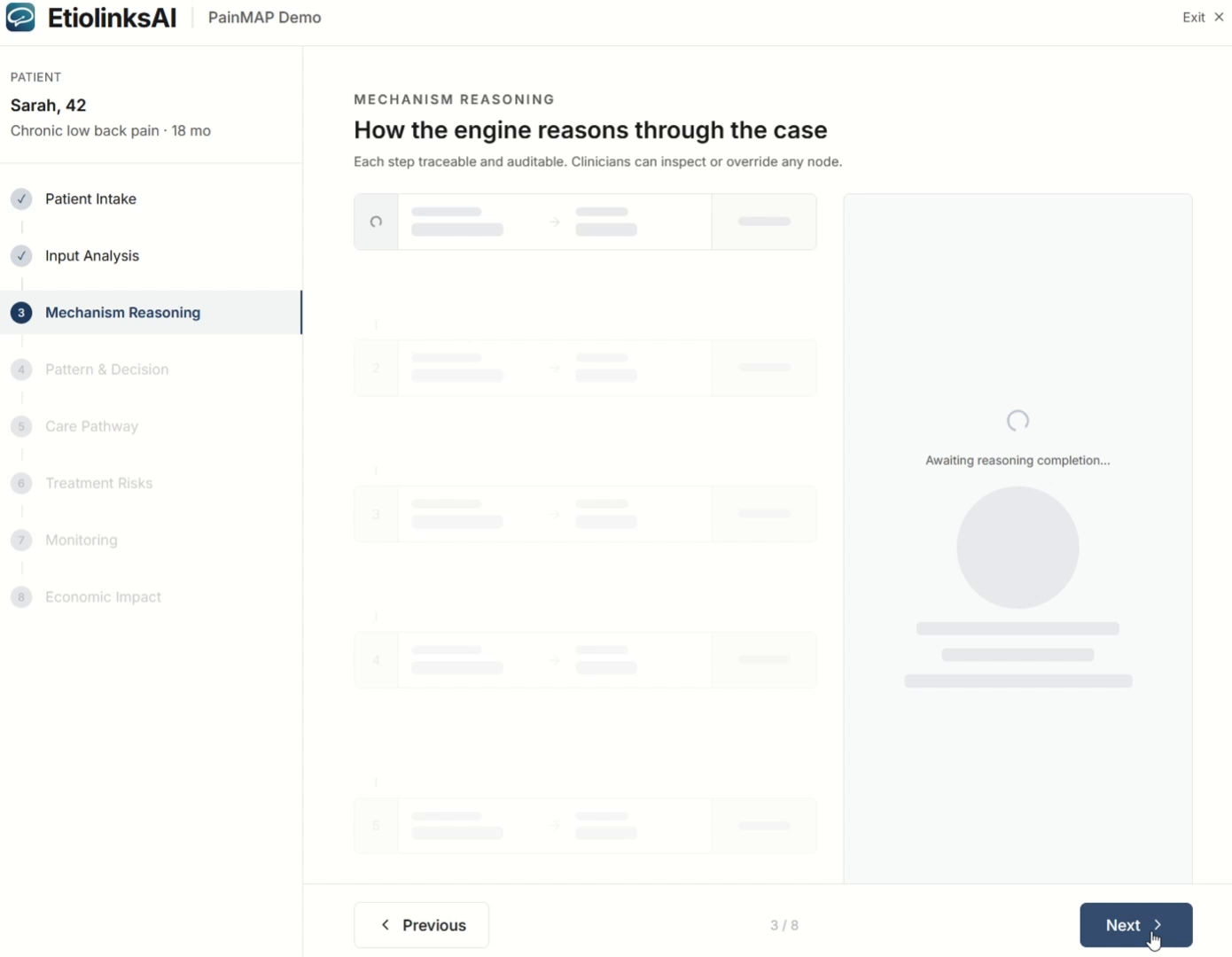
02
Reasoning
Done while you wait.
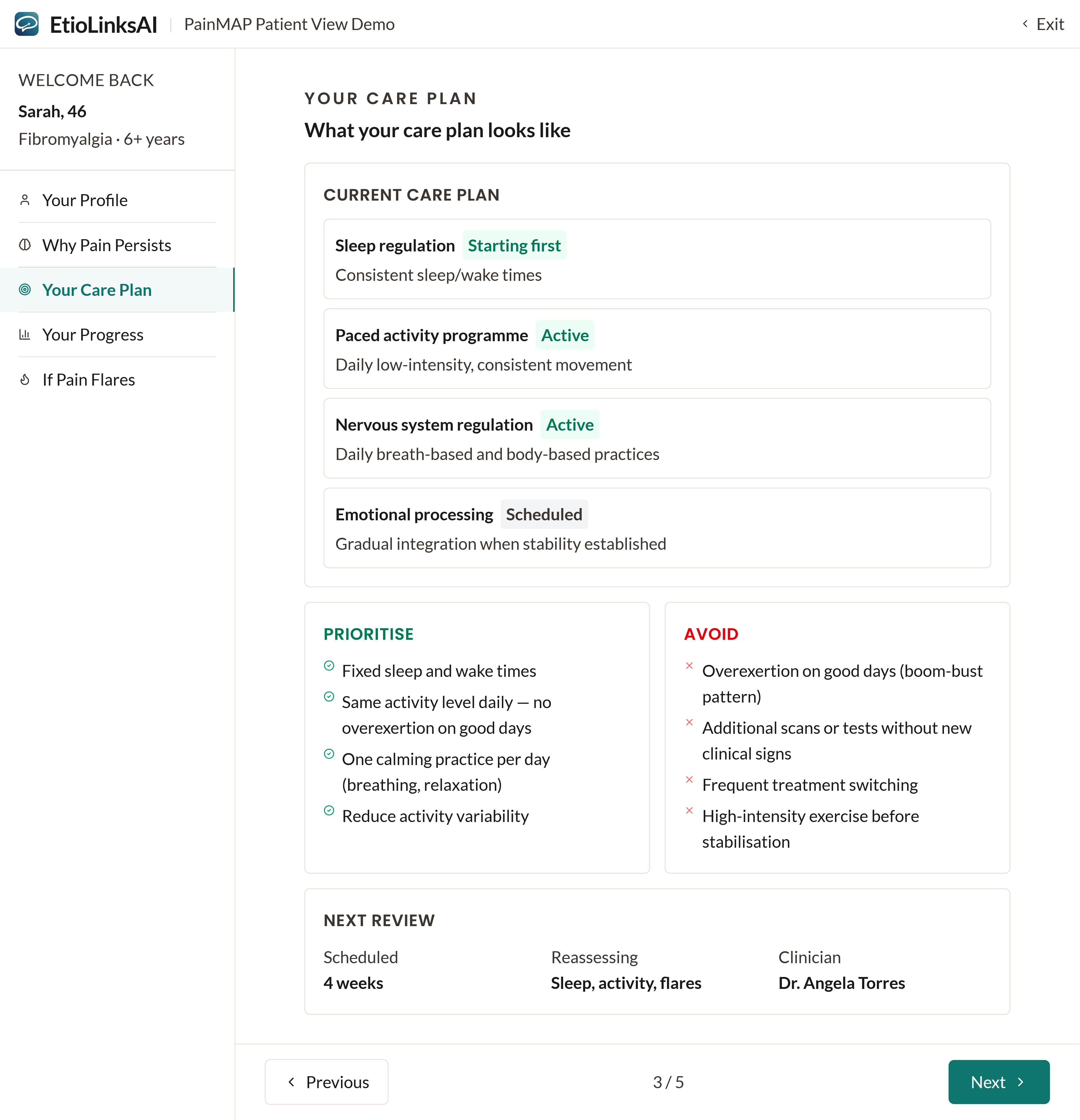
03
Direction
You leave with a report, next steps, and self-management resources.
Outcomes.
Faster clarity
Direction at the first visit, not after months of tests.
Reduced harm
Fewer unnecessary scans, referrals, and medications.
Improved trust
Transparent reasoning rebuilds confidence in care.
Better functional improvement
Targeted pathways translate to real recovery.
Real-world impact.
Patients who used to wait months now get matched to the right pathway at their first visit.
— Health System Director
Our follow-up data shows meaningful functional improvement.
— Clinical Research Lead
Your questions, answered.
PainMAP identifies what is driving your specific pain and matches you with interventions shown to help similar patterns.
Patients with similar profiles report1
Sustained one year after treatment. With current standard of care, only 40% of patients experience moderate improvement.
1AHRQ-funded study: Clinical Decision Support for Chronic Pain Management (RTI).
Every recommendation is reviewed and controlled by your clinician. PainMAP provides guidance, and your doctor makes the final call.
By identifying the right path early, PainMAP helps avoid unnecessary scans, referrals, and medications that are unlikely to help.
3-5
Fewer visits
$2K+
Potential savings
No
Unnecessary scans or procedures
PainMAP explains your pain drivers and recommended actions in plain language. No medical jargon. It provides education and self-management modules to enhance the quality of your visit.
Your drivers
Central sensitization
Recommended
Pain reprocessing + paced activity
Expected
Gradual improvement
Your drivers
Central sensitization
Recommended
Pain reprocessing + paced activity
Expected
Gradual improvement
See how your pain scores and activity levels change over weeks. Evidence of improvement builds confidence.
Pain score over 12 weeks
Partner with us to improve chronic pain care.
Ask your clinician about PainMAP, or reach out to learn how you can advocate for better care.